The
With
Spiritual and Historical Importance
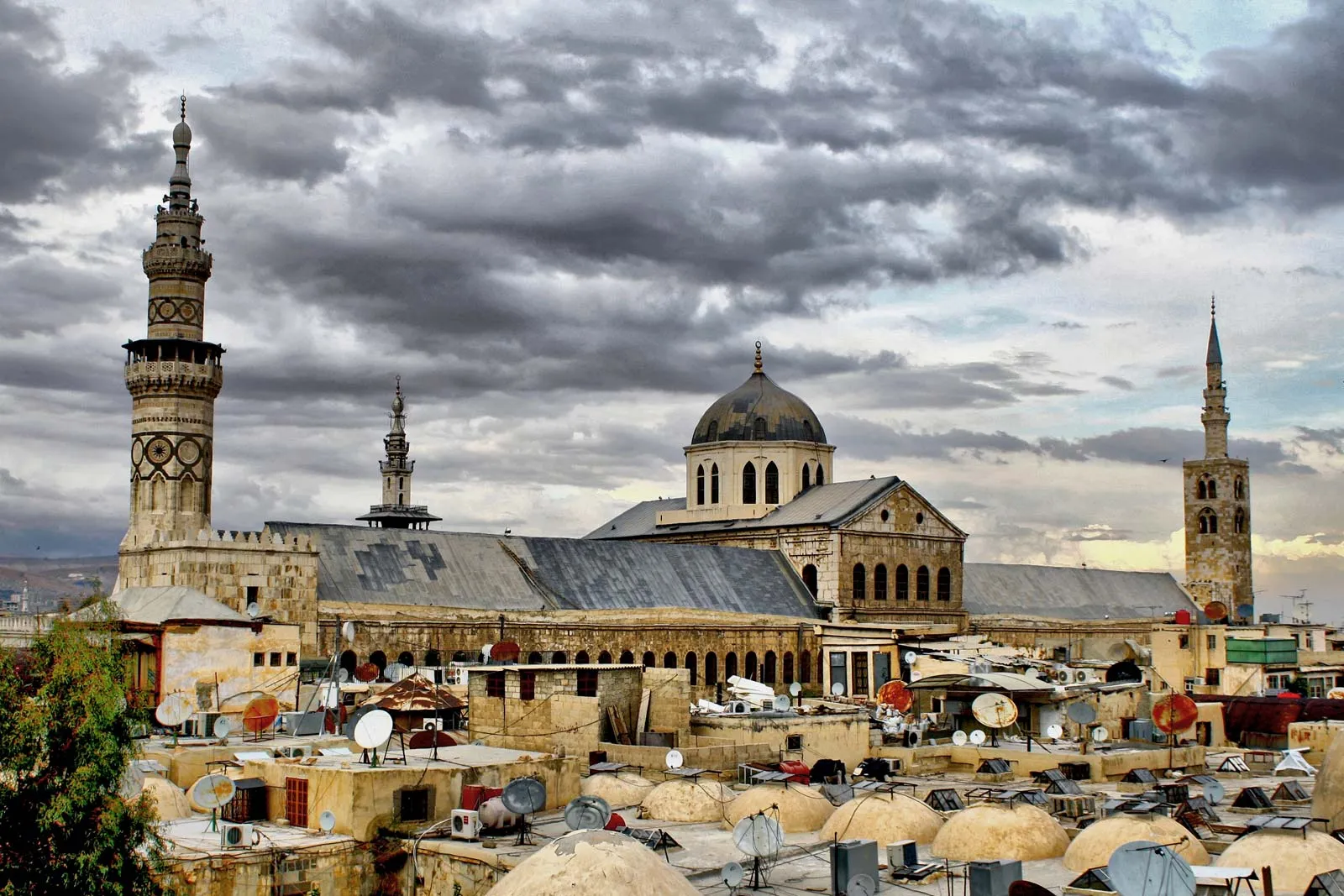
Damascus was the first true capital of the Islamic world, and the palace complex was the seat from which early Caliphs managed an empire stretching from Spain to India.
Center of the Caliphate : This site was the primary administrative hub where early Islamic laws, justice systems, and administrative protocols were established.Proximity to the Divine : The palace was intentionally built next to the Umayyad Mosque to symbolize that the Caliph’s leadership was guided by the principles of faith.Prophetic Connections : The complex is deeply tied to the Umayyad Mosque, which houses the shrine ofJohn the Baptist (Prophet Yahya) , a site revered by both Muslims and Christians.
Architecture and the Mosque-Palace Link
The architecture of the Umayyad era was a groundbreaking blend of Roman, Byzantine, and emerging Islamic styles. While the original Al-Khadra (Green Palace) of the Caliphs has seen significant changes over centuries, the surrounding structures still showcase the grandeur of the 8th century.
Innovative Design : The complex introduced early Islamic elements such as the horseshoe arch and the square minaret, which later became architectural prototypes for the entire Muslim world.Aniconic Art : The walls were originally adorned with massive mosaics depicting a vision of paradise, using vegetal and geometric motifs instead of human figures—a tradition that defined Islamic art for centuries.The Great Courtyard : The vast open-air sahn (courtyard) was a revolutionary social space that allowed the public to gather near the seat of power, emphasizing the Islamic ideal of accessibility.
Top Things To See in Old Damascus
The Umayyad Mosque : The "Masterpiece of Islamic Architecture," famous for its three minarets and the stunning Barada mosaics.The Citadel of Damascus : A medieval fortified palace complex that protected the city's rulers for centuries.Azm Palace : A nearby 18th-century Ottoman-era palace that offers a glimpse into the later evolution of Damascene royal living.Al-Hamidiyah Souq : The legendary covered market that leads directly to the entrance of the palace and mosque area.
2026 Visitor and Travel Updates
As Syria reopens its doors to international tourism in 2026, there are several key updates for travelers:
New Entrance Fees : As of January 1, 2026, major heritage sites like the Azm Palace and the National Museum are classified as first-grade sites with updated entry fees (typically around 100,000 SYP for foreign visitors).Currency Swap : Syria transitioned to a new currency system on January 1, 2026, removing two zeros from the old pound. Ensure you clarify whether quoted prices are in "old" or "new" pounds.Visa on Arrival : Most international travelers can now obtain a visa on arrival at Damascus International Airport or land borders, provided they have pre-arranged security clearance through an authorized travel partner.
The Umayyad Palace Complex is more than an archaeological site; it is a symbol of a formative era in world history. Walking its corridors allows you to experience the transition of a civilization as it moved from a local community to a global empire.
Contact
RECENT POSTS
Things To Do
January 31, 2026
Things To Do
January 31, 2026
Things To Do
January 31, 2026